Problem.
Financial products often struggle with trust, clarity, and accessibility. Users are asked to understand complex systems quickly, yet many fintech interfaces rely on dense language, inconsistent branding, and unclear user flows.
This creates friction, reduces confidence, and raises barriers for adoption, especially for users engaging with financial tools for the first time.
Outcome.
The project resulted in a cohesive visual system and digital foundation that communicates reliability, simplicity, and scalability.
Through brand definition and interface alignment, Linq’s experience was positioned to feel clear, modern, and approachable, supporting user confidence across touchpoints.
Research & Discovery.
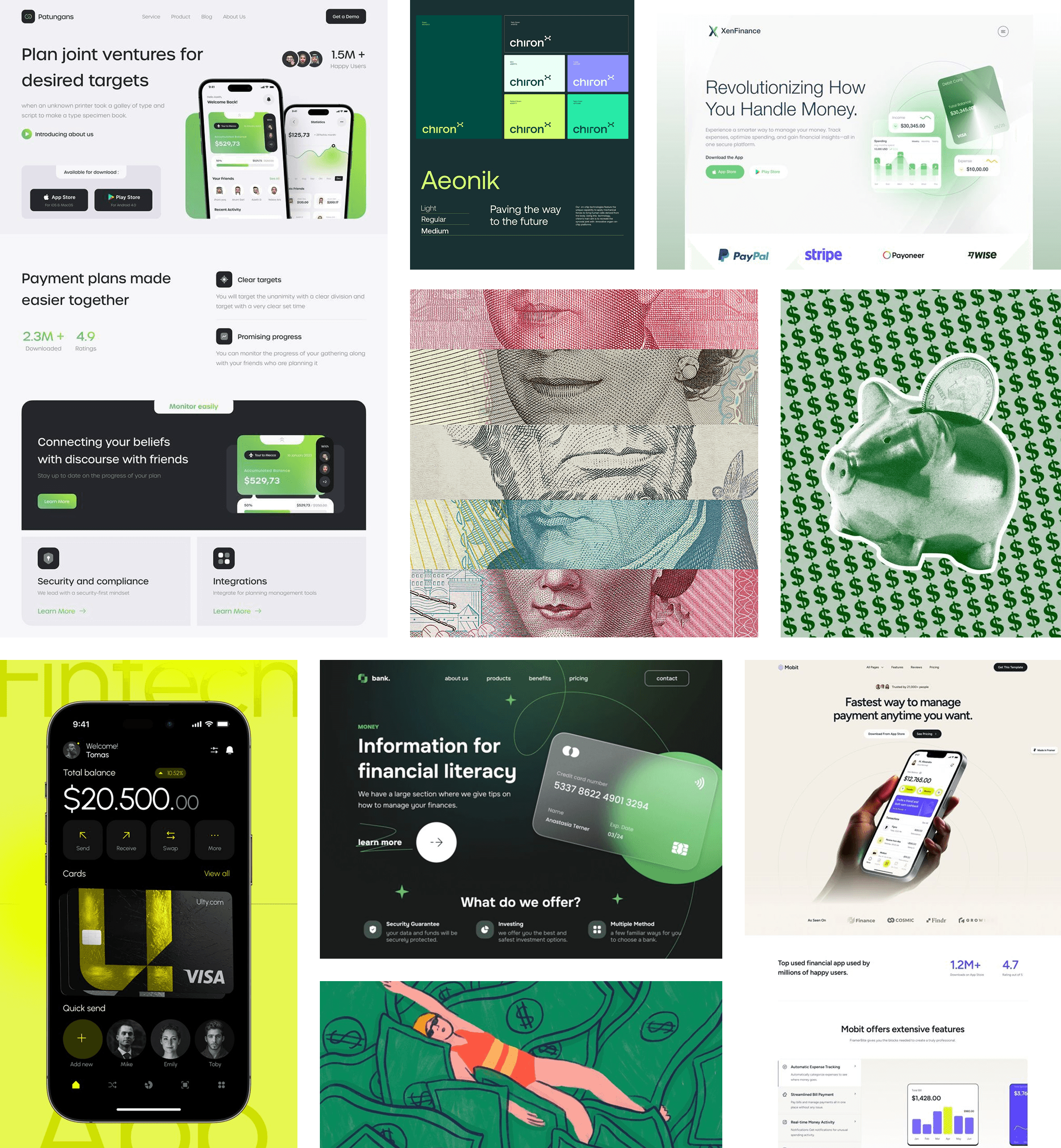
Early research focused on understanding how successful fintech products establish credibility and usability through visual language and interaction patterns.
Key insights included:
Clear hierarchy and restrained motion increase perceived trust
Consistent branding across platforms reduces cognitive load
Simple language and spacing improve comprehension in complex systems
These findings guided both brand and interface decisions.
Design Principles.
Based on research, the following principles guided the work:
Clarity over decoration
Consistency across brand and product
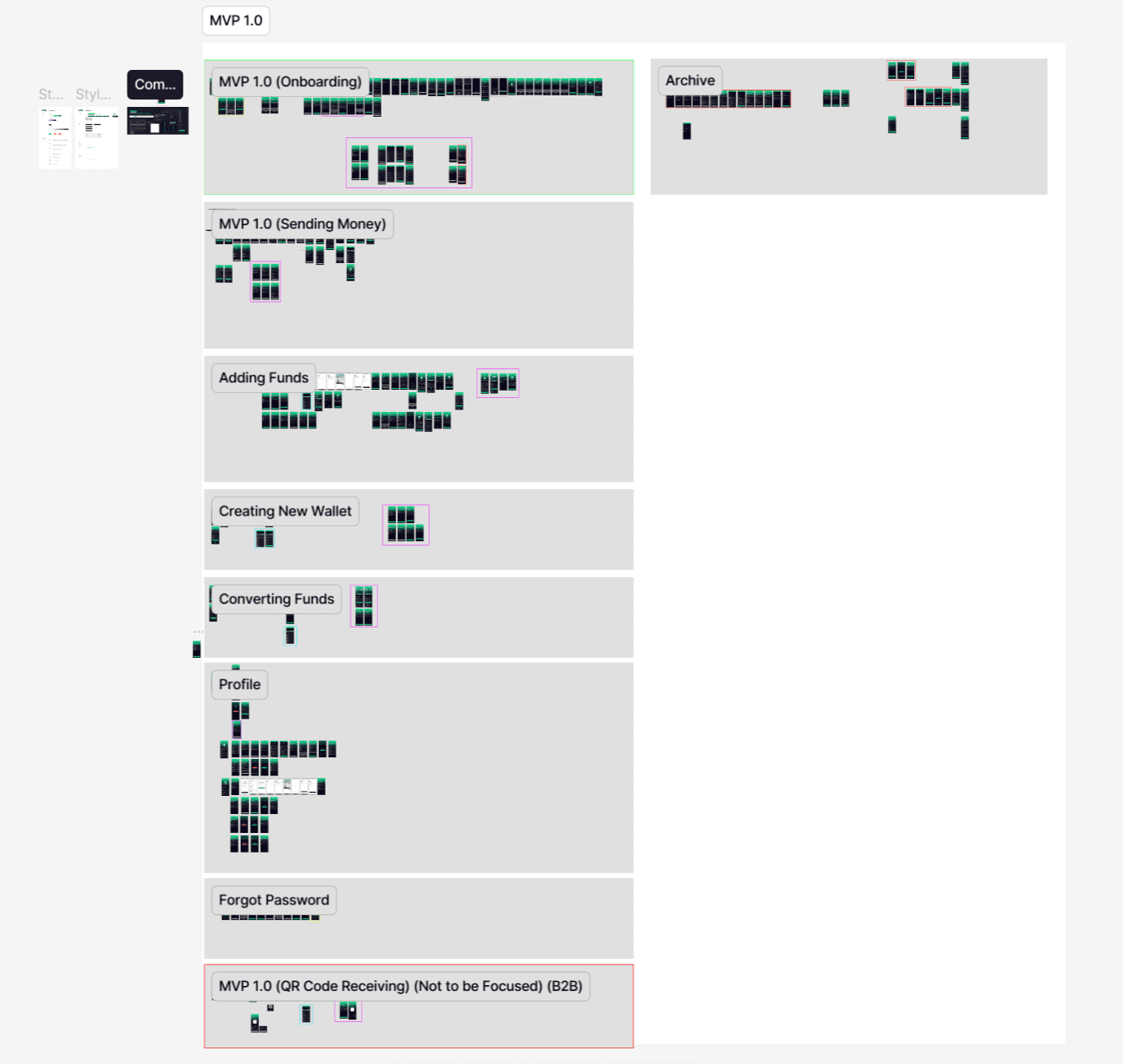
Scalable systems instead of one-off screens
These principles ensured design decisions remained aligned as the product evolved.
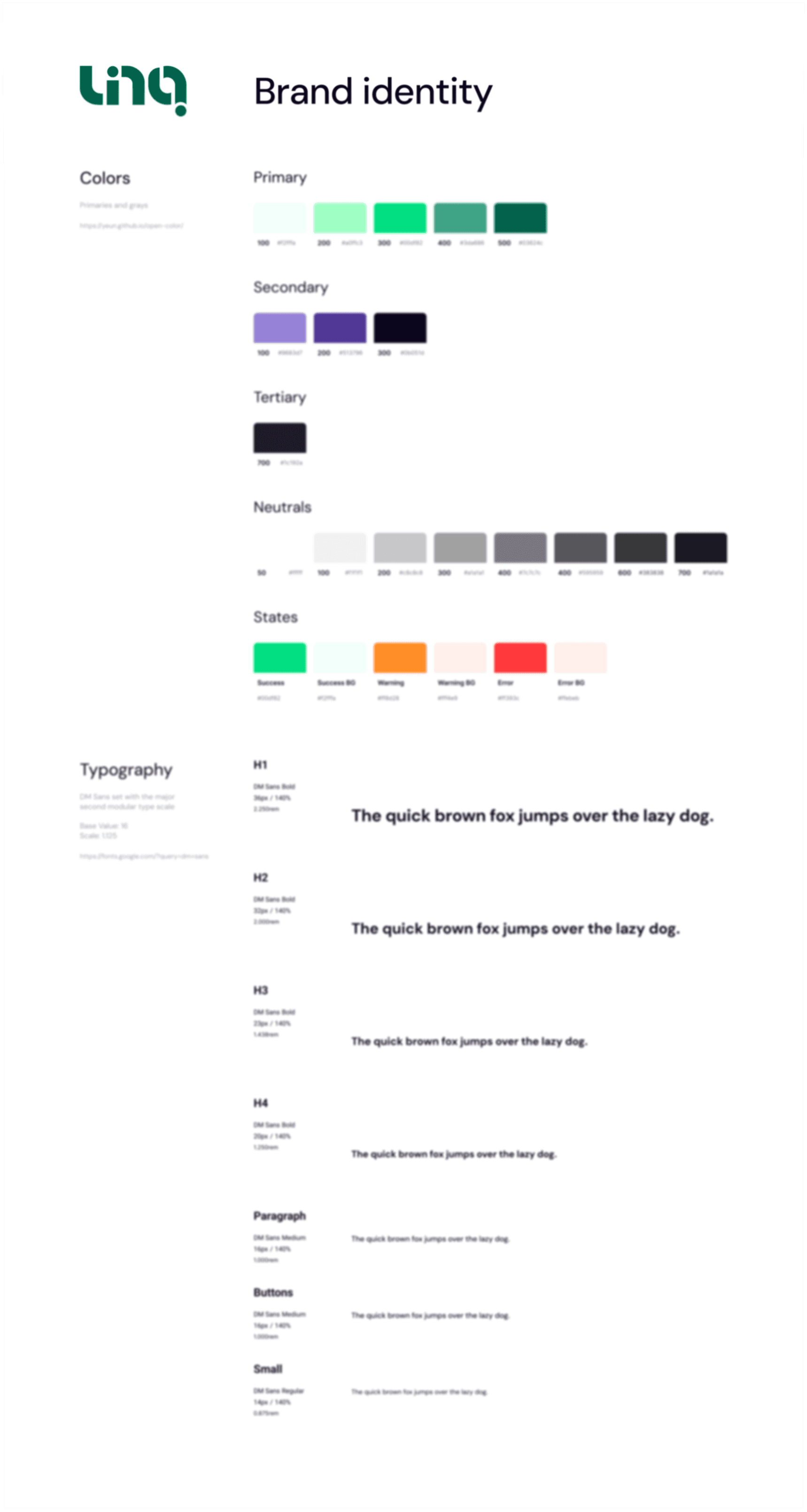
Brand Identity.
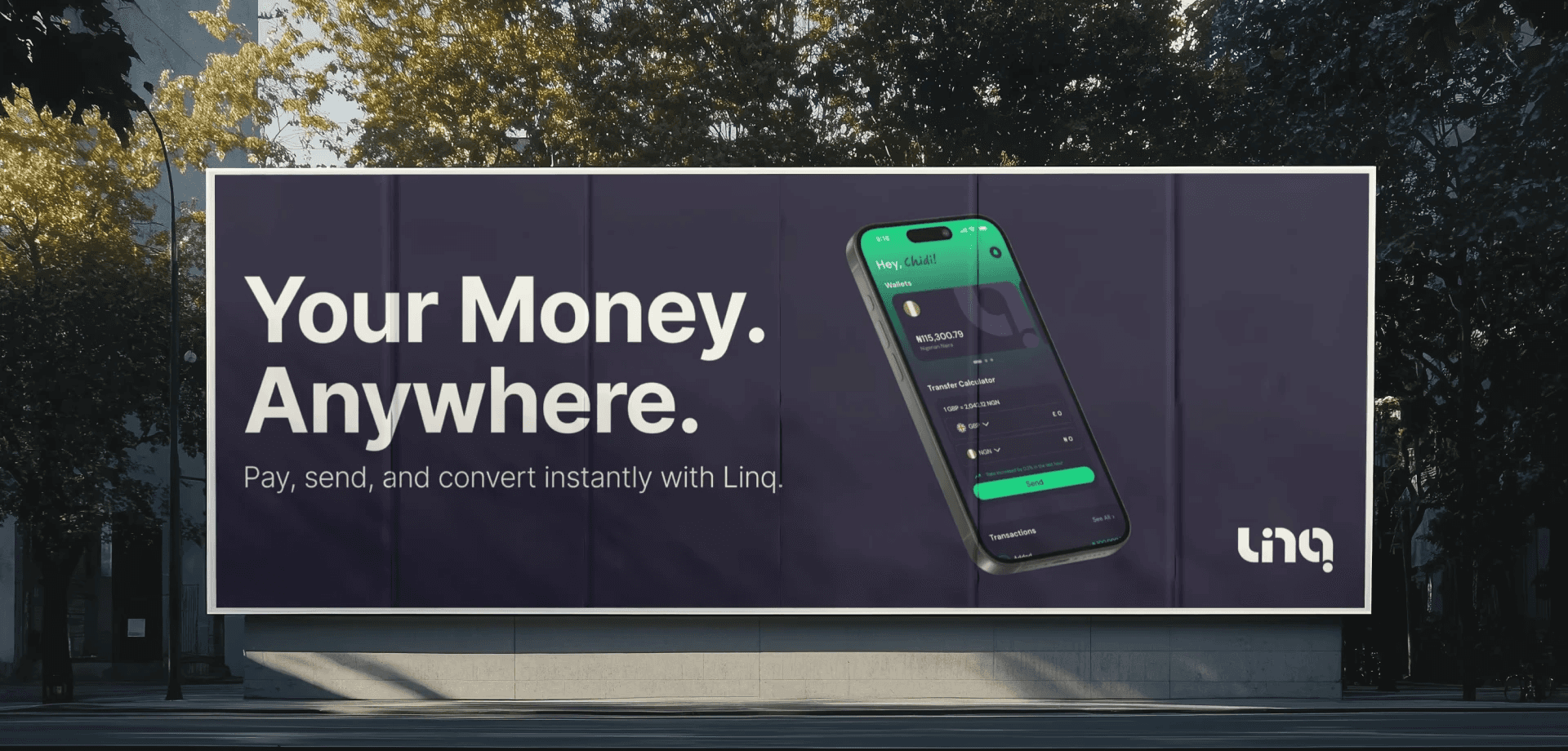
I contributed to defining Linq’s brand foundations, including visual tone, typography direction, color usage, and compositional rules.
The goal was to balance approachability with credibility, creating a brand that feels modern without sacrificing trust.
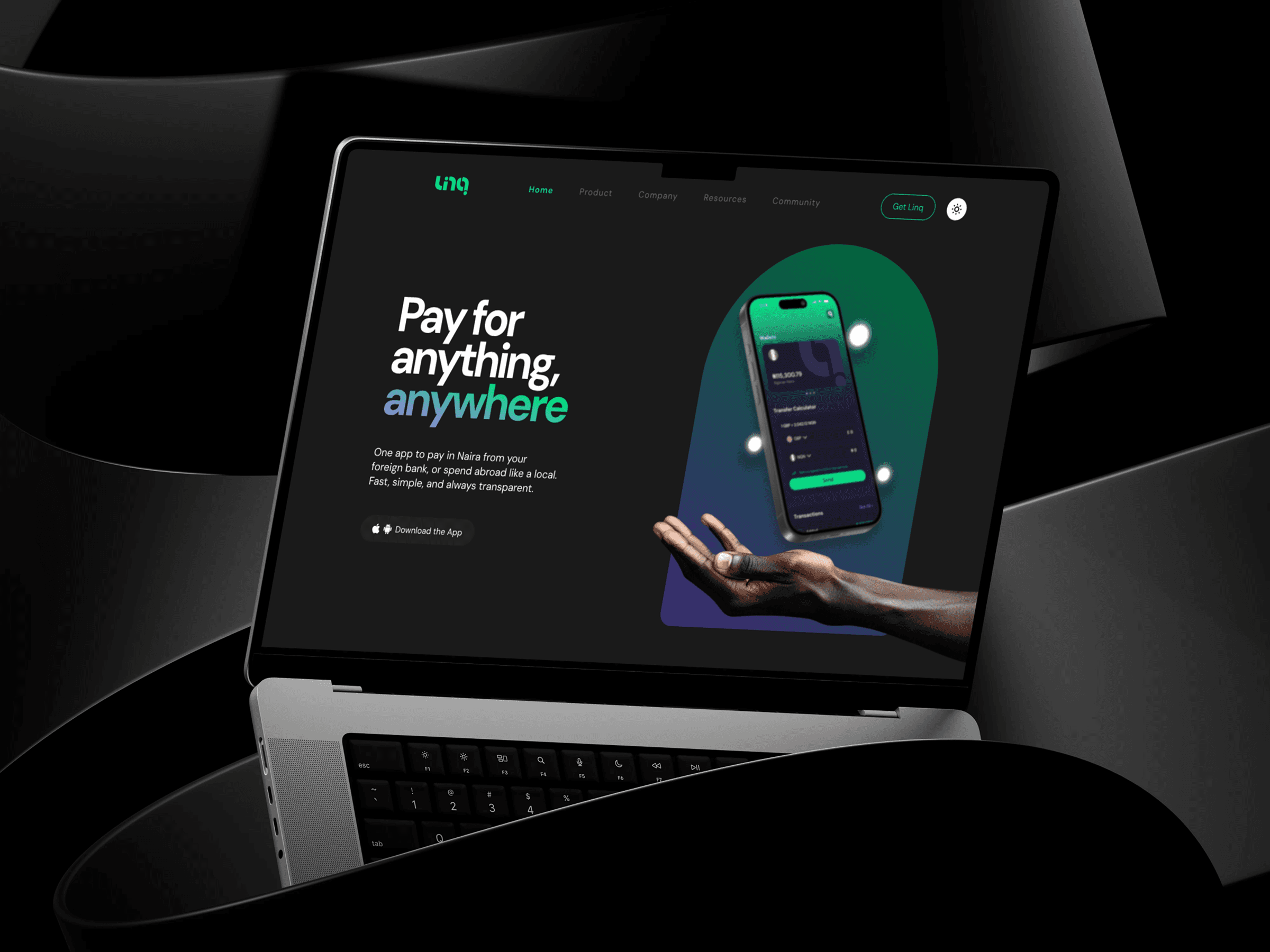
Website Design.
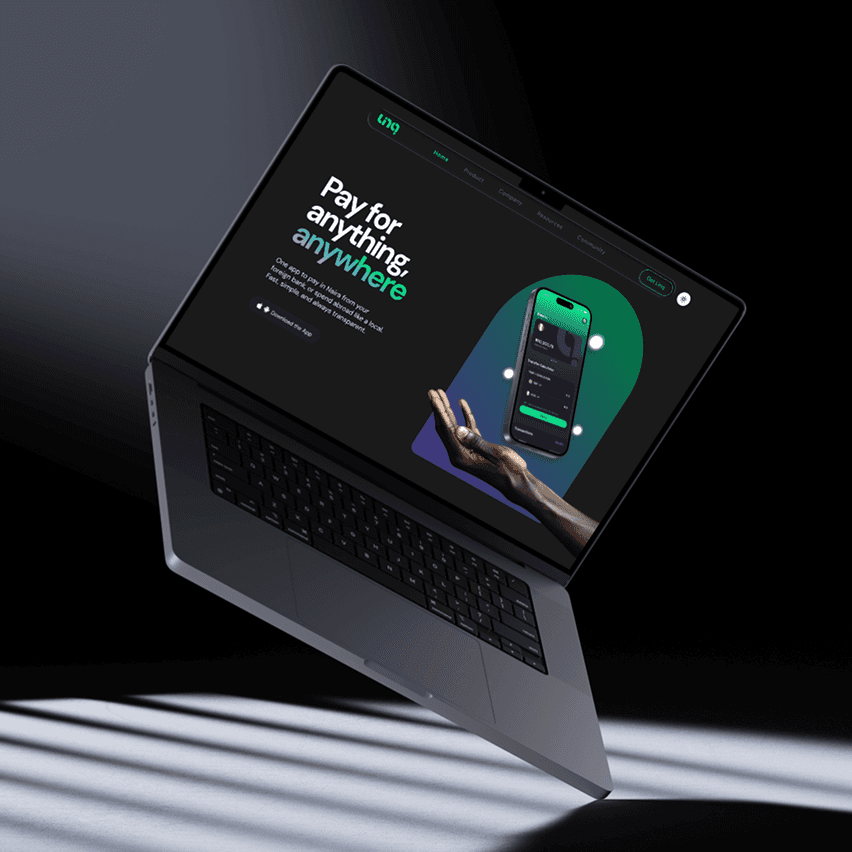
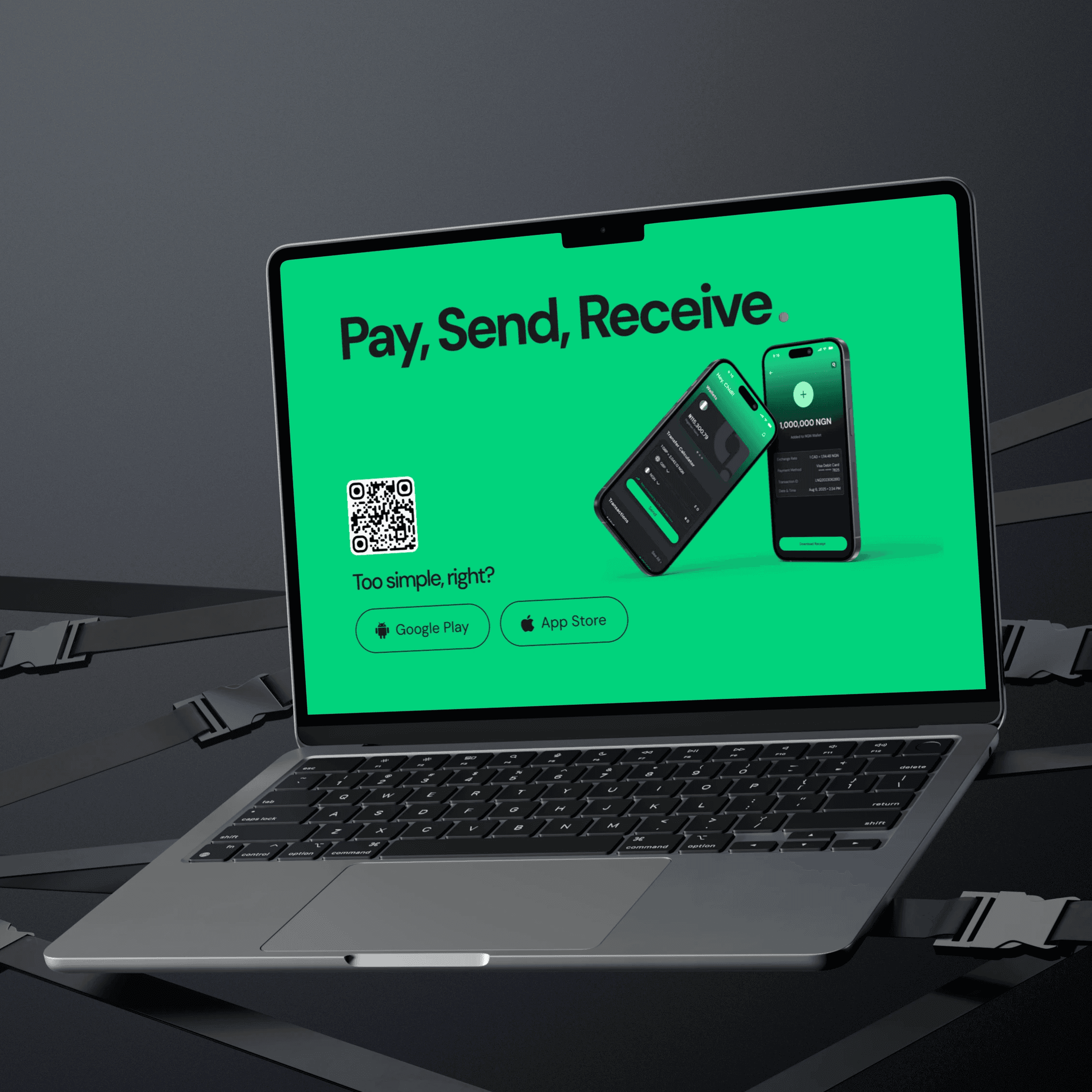
I designed the homepage for linq, focusing on:
Clear value communication
Strong visual hierarchy
Consistent brand expression
Layouts were designed to scale across devices while maintaining clarity and focus.
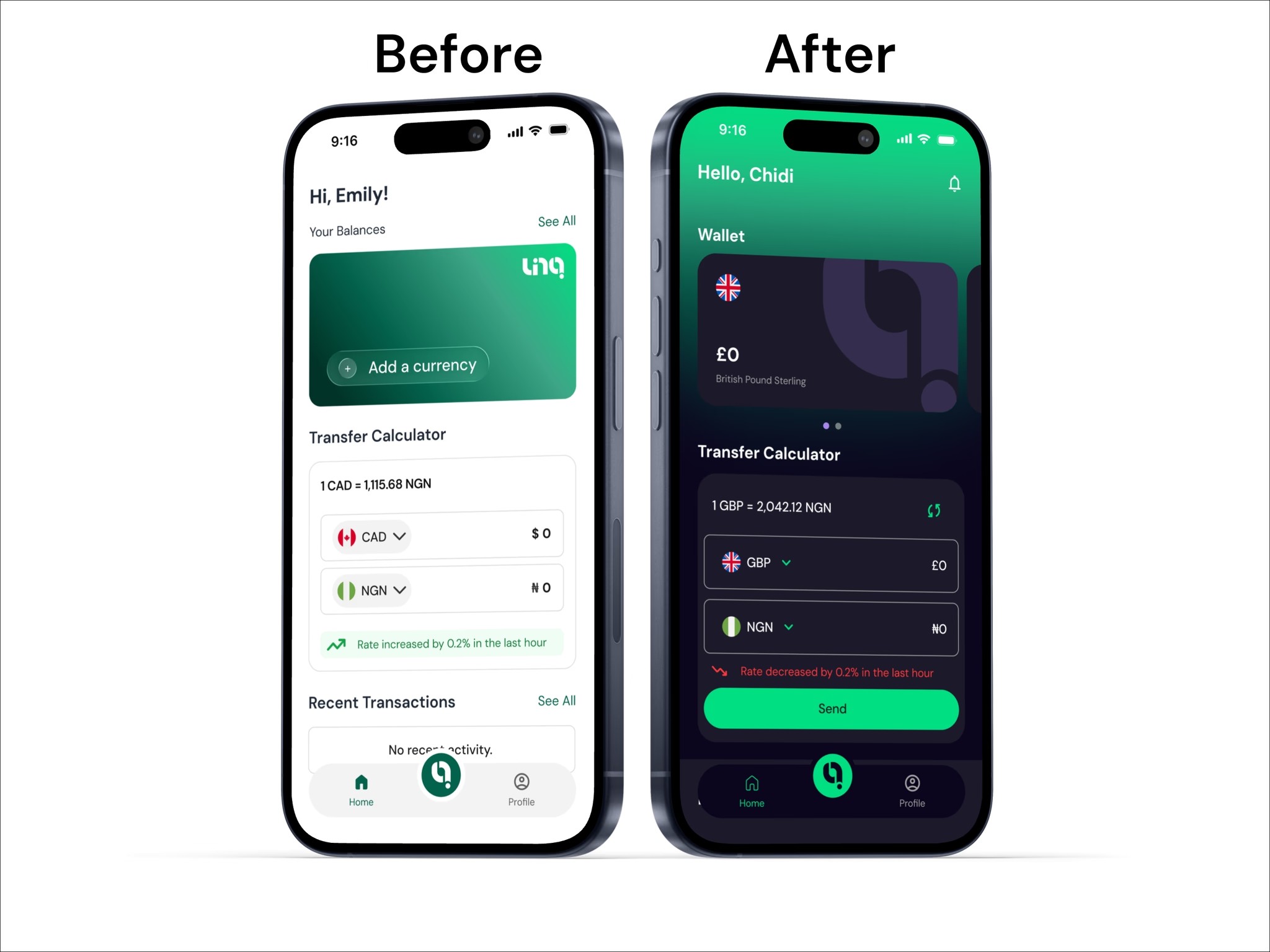
Product Collaboration.
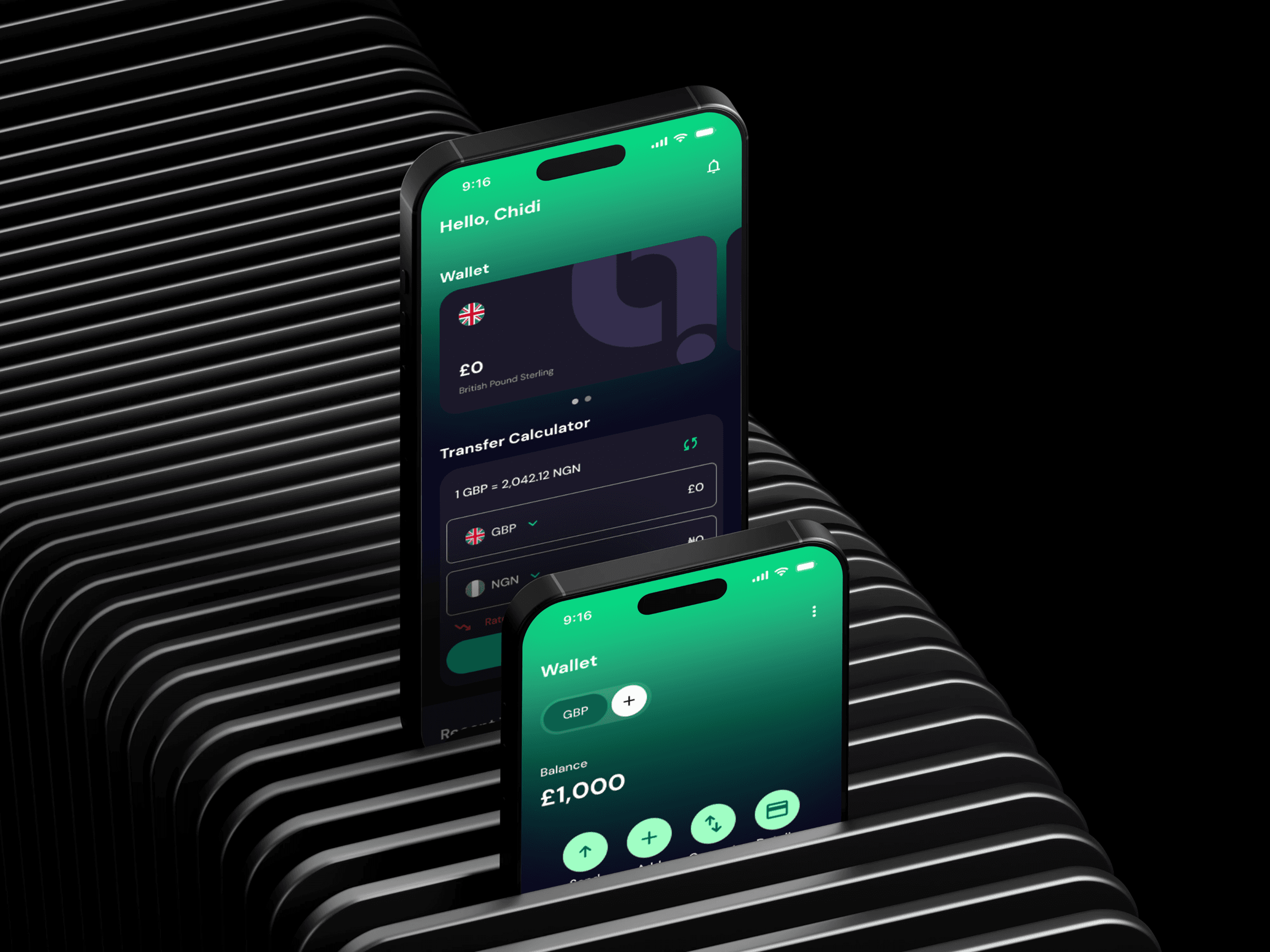
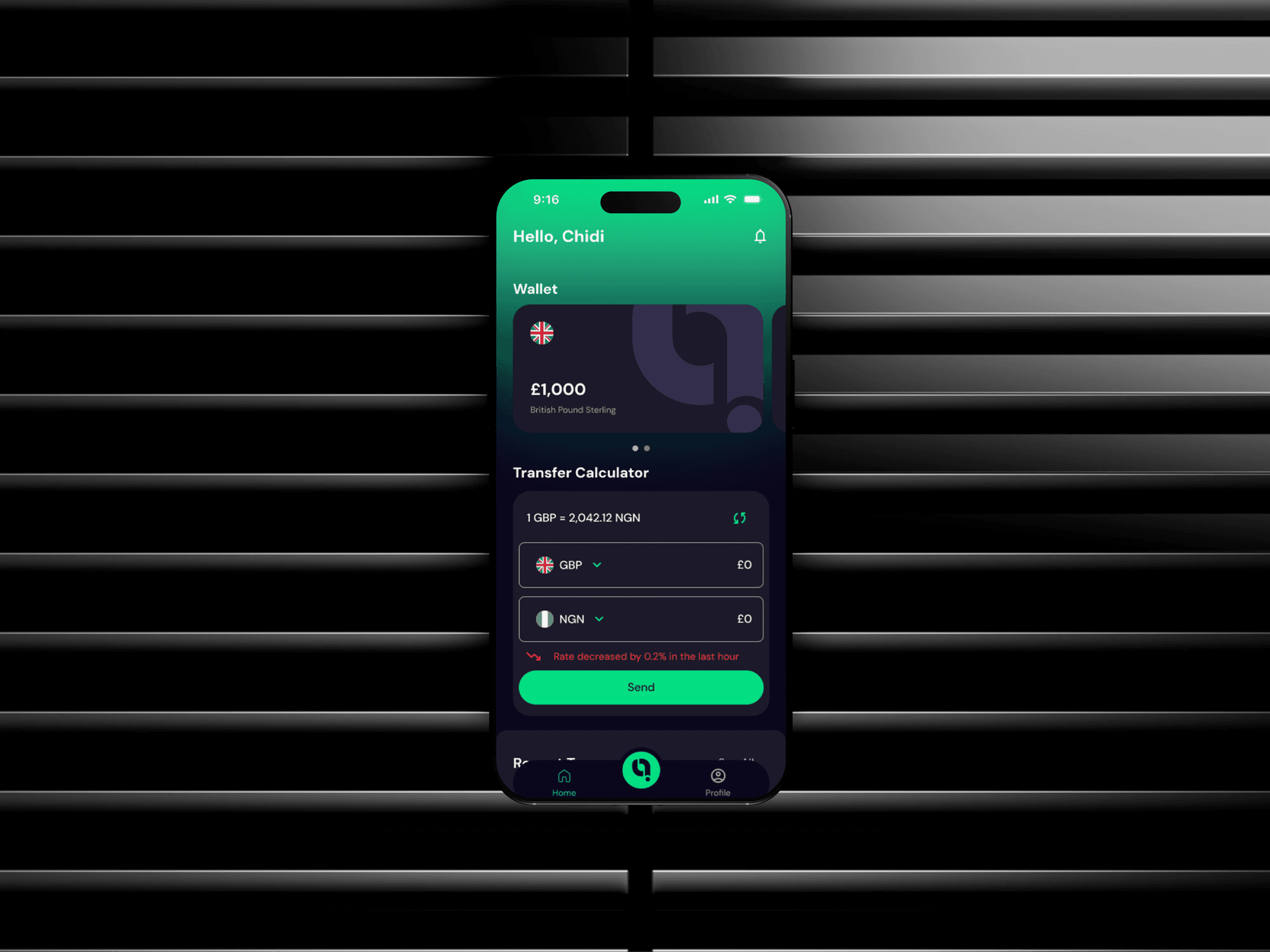
Alongside brand and web work, I supported the team with UI/UX contributions for mobile, ensuring visual and interaction consistency between the product and brand layers.
This included layout feedback, component alignment, and design system considerations.
Final Outcome.
The final result is a cohesive design system spanning brand, web, and product touchpoints.
Rather than isolated deliverables, the work focused on creating a flexible foundation that can evolve with the platform.
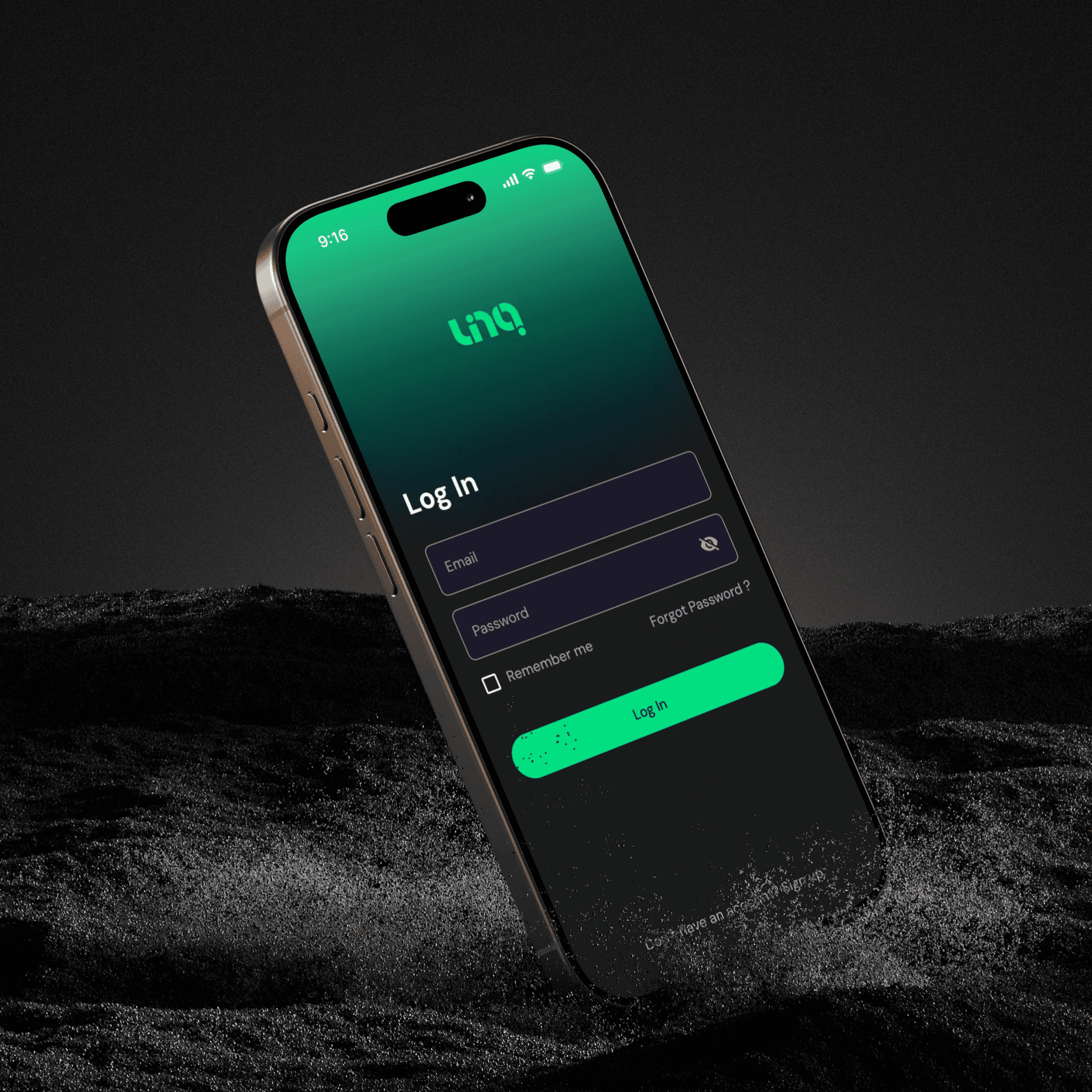
Product Alignment.
All design decisions were made to support clarity, scalability, and trust, key requirements for financial products operating in complex environments.
Impact.
Established a clear and trustworthy visual foundation
Aligned brand and product design into a single system
Supported scalability across marketing and product surfaces
Strengthened user confidence through clarity-driven design