Problem.
Human biology education is often dense, terminology-heavy, and delivered through passive formats. Students experience cognitive overload, low retention, and limited engagement, especially when studying independently.
Low health literacy globally further highlights the need for accessible tools that make understanding the human body clearer and more interactive.
Outcome.
Research shows that active learning and gamified systems significantly improve engagement, retention, and course completion. There is an opportunity to redesign biology education using structured progression, visual reinforcement, and interactive feedback.
BIO positions itself at the intersection of health literacy and digital learning.
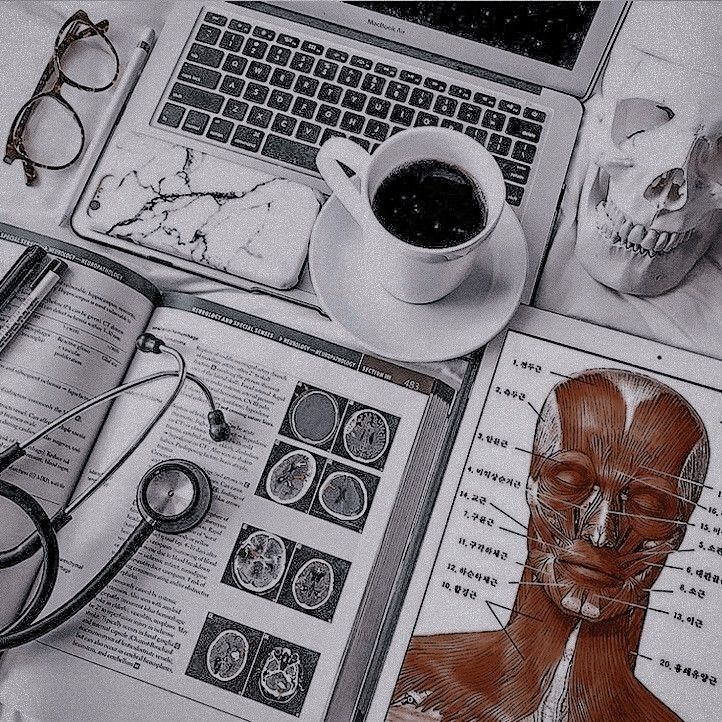
Health Literacy & Education Landscape.
Global research reveals critical gaps in both health literacy and science education.
60% of adults worldwide struggle to understand basic health information (WHO).
Low health literacy is directly linked to higher rates of chronic disease and medication errors (JAMA).
Education level strongly impacts long-term health outcomes, with higher education correlating to better cardiovascular and metabolic health (Tromsø Study).
At the academic level, biology education presents additional challenges:
Students exposed to passive, lecture-heavy formats experience higher cognitive overload (LifeSciEd).
Students with low prior knowledge are significantly more likely to fail biology courses.
Gamified learning environments have shown a 34% improvement in test scores.
Interactive courses demonstrate 15% higher completion rates, and 67% of students prefer interactive learning formats.
Implication
Biology learning must be structured, interactive, and accessible. Static content and passive instruction limit retention, confidence, and long-term understanding.
BIO was designed as a response to these systemic gaps.
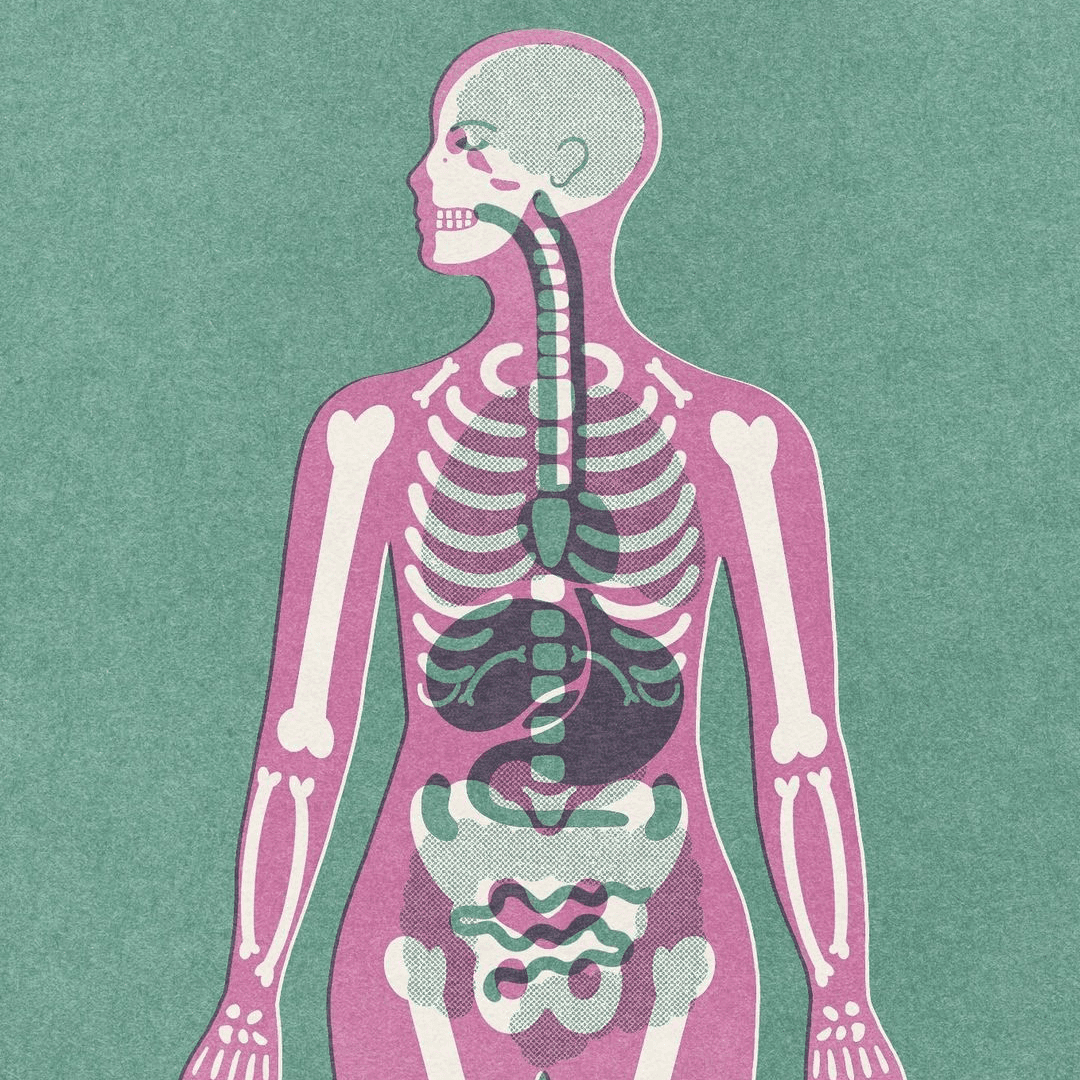

Users & Personas.
BIO was designed for two primary learners: motivated high school students preparing for health-related programs and first-year pre-med students navigating high-volume, fast-paced coursework. While one seeks structure and clarity, the other needs efficient review and deeper understanding. Together, they informed BIO’s progression system, visual learning tools, and quiz-based reinforcement.
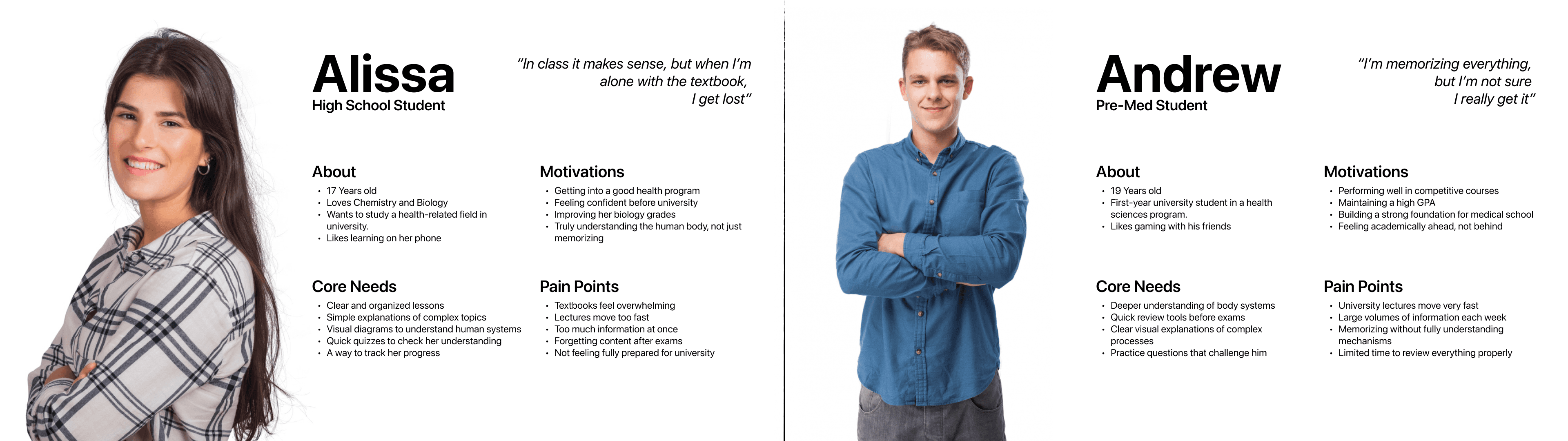
Information Arquitecture.
BIO organizes content by body systems to create structured learning pathways. Each system follows a consistent progression:
System → Overview → Breakdown → Interactive Diagram → Quiz → Progress Tracking
This modular hierarchy reduces cognitive overload and creates predictable learning patterns.
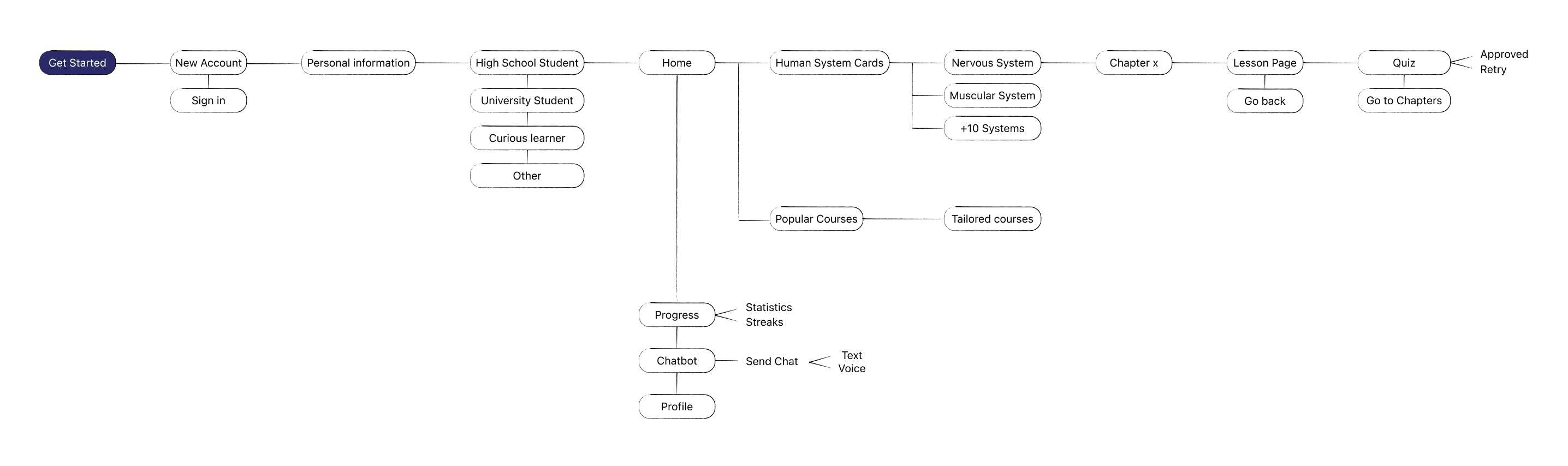
Visual direction.
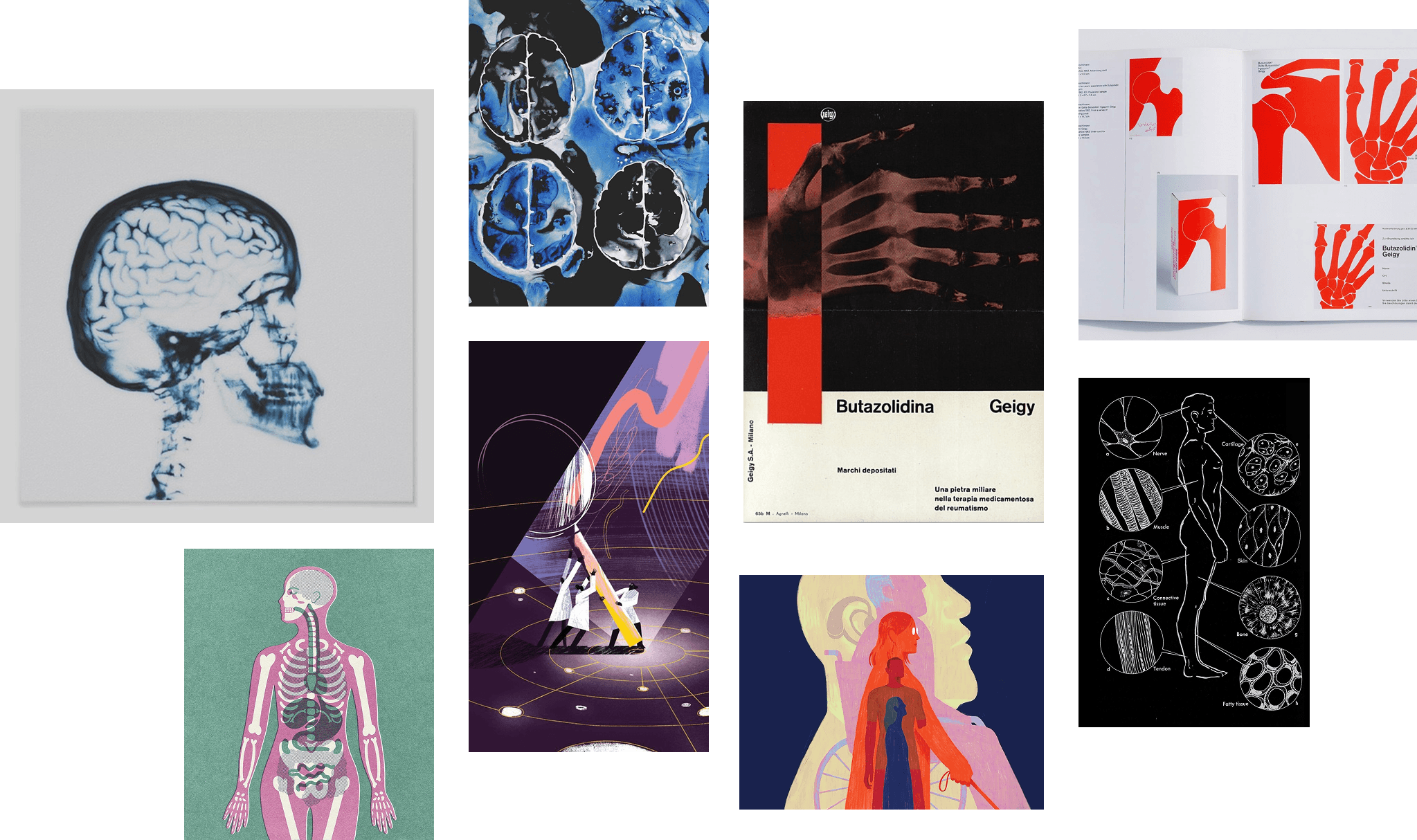
This moodboard explores a visual language that makes human biology feel approachable, contemporary, and visually compelling rather than clinical or overwhelming.
I intentionally moved away from textbook-style diagrams and literal medical imagery, focusing instead on abstract anatomy, layered forms, and graphic compositions that invite curiosity at first glance.
Visual System and Accessibility.
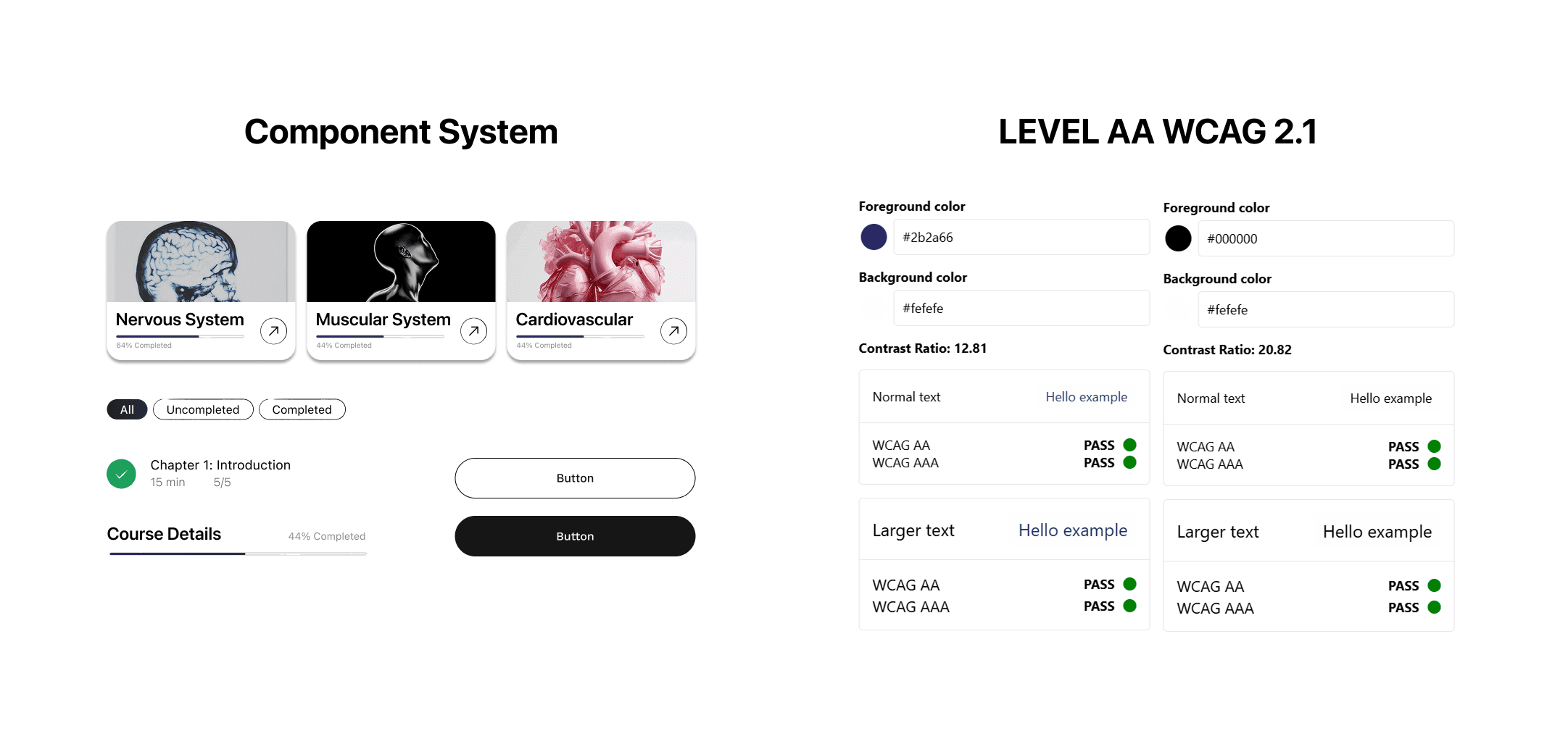
BIO balances playfulness with academic credibility through a clean, system-based color palette and clear typography hierarchy.
The interface follows WCAG 2.1 AA accessibility standards. Contrast ratios were tested using a contrast analysis plugin to ensure readability. Typography scaling, sufficient spacing, and accessible touch target sizing were implemented across the system. Information is never conveyed through color alone.
Accessibility was integrated from the beginning as a core design principle.
Final Design.
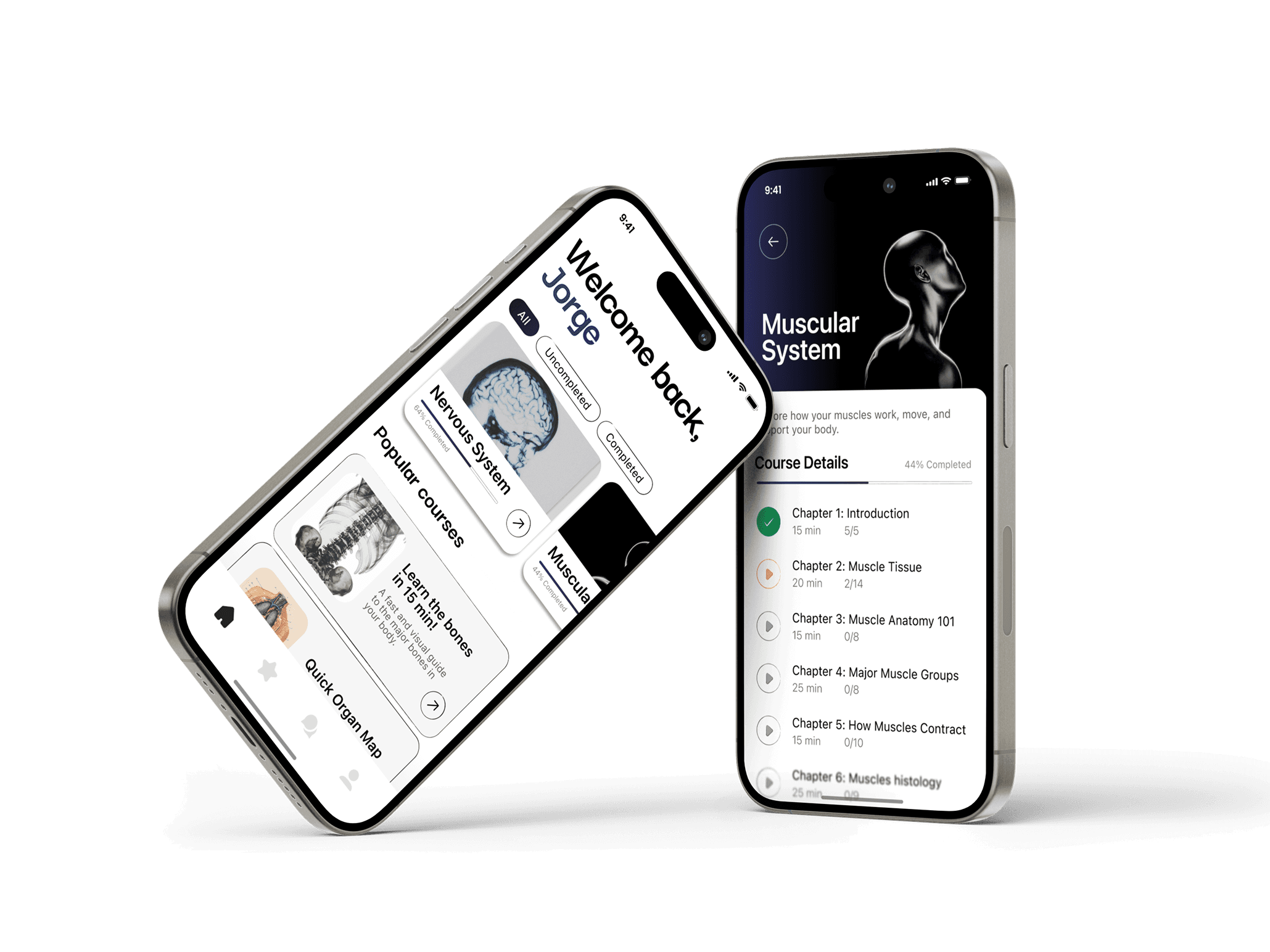
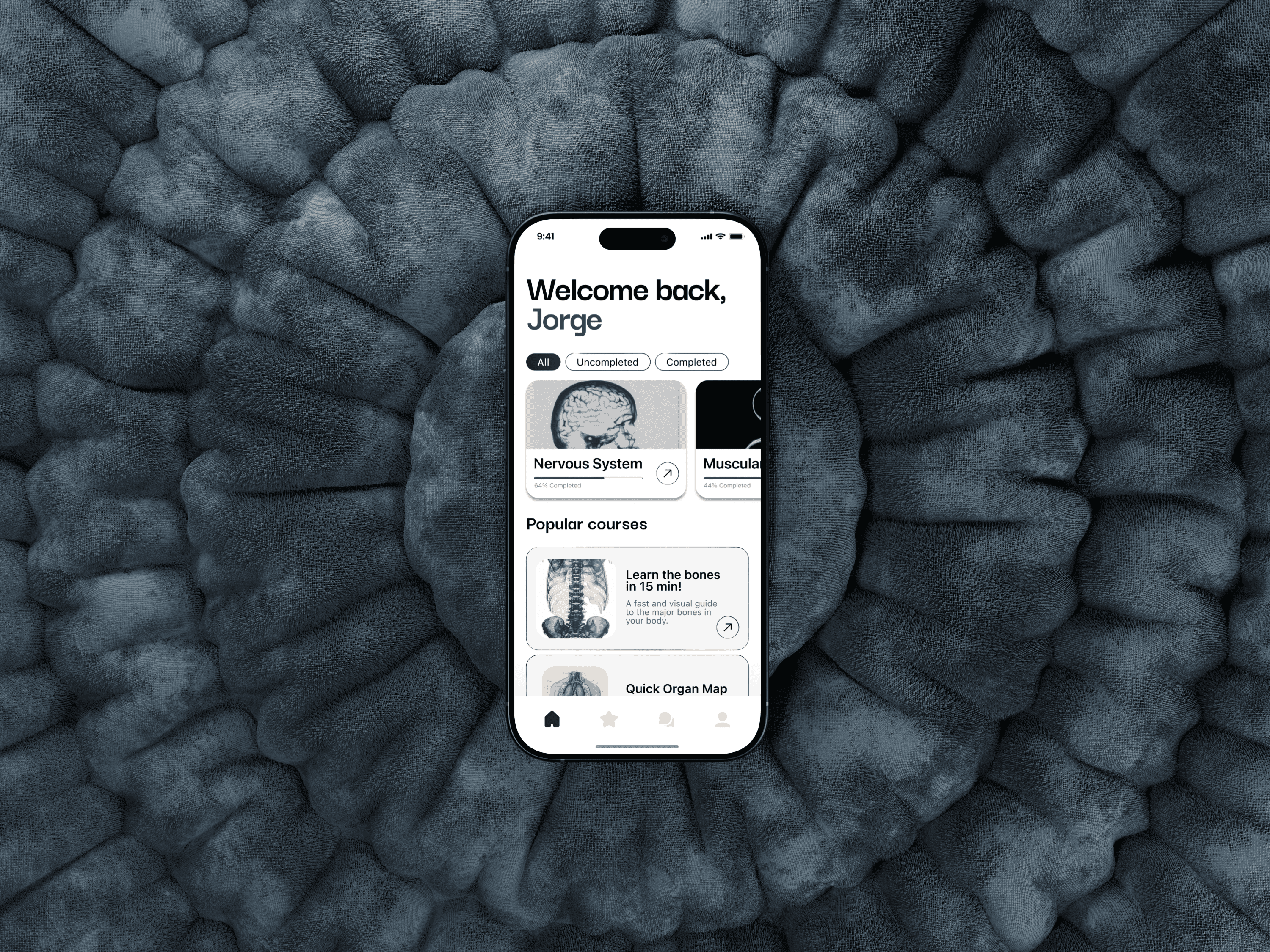
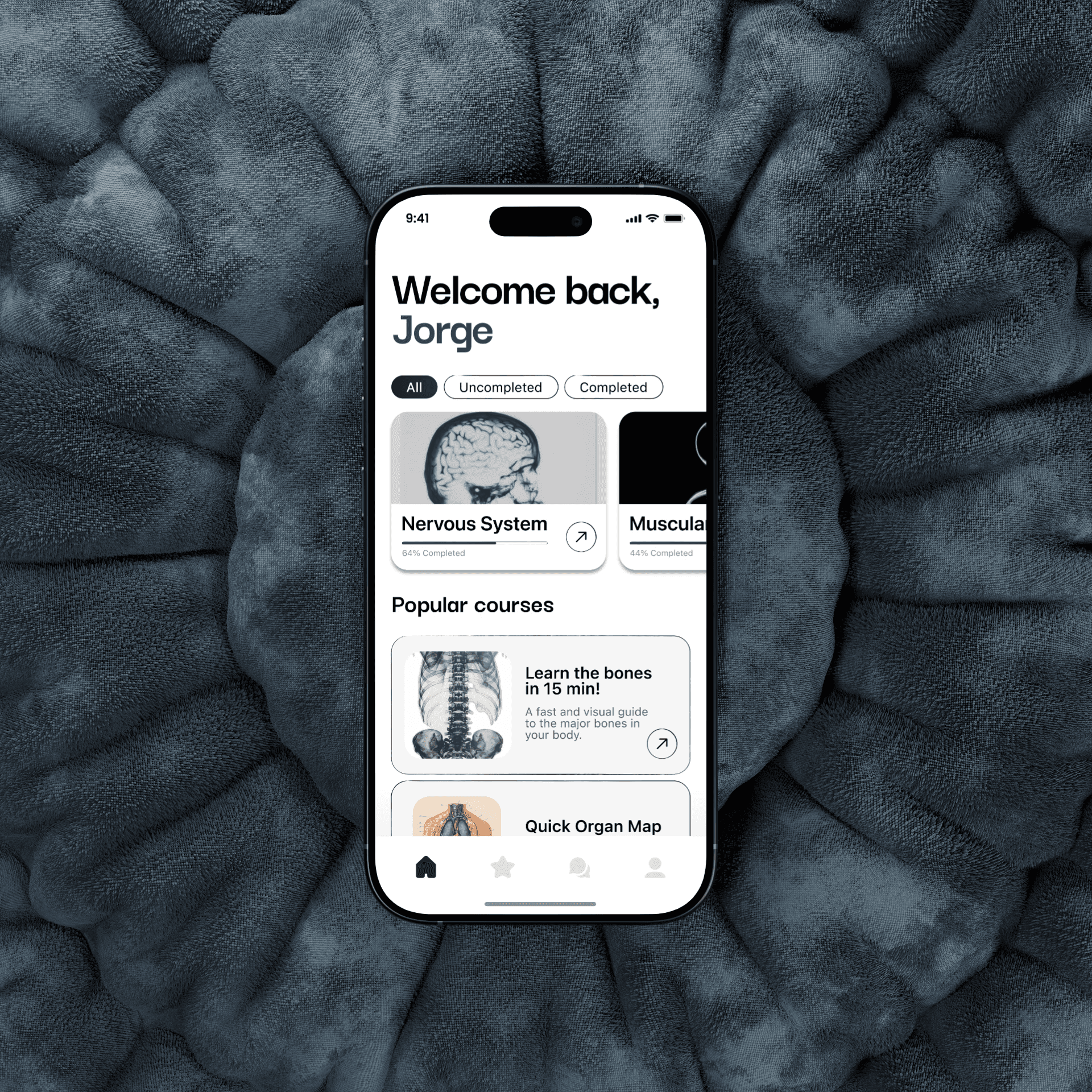
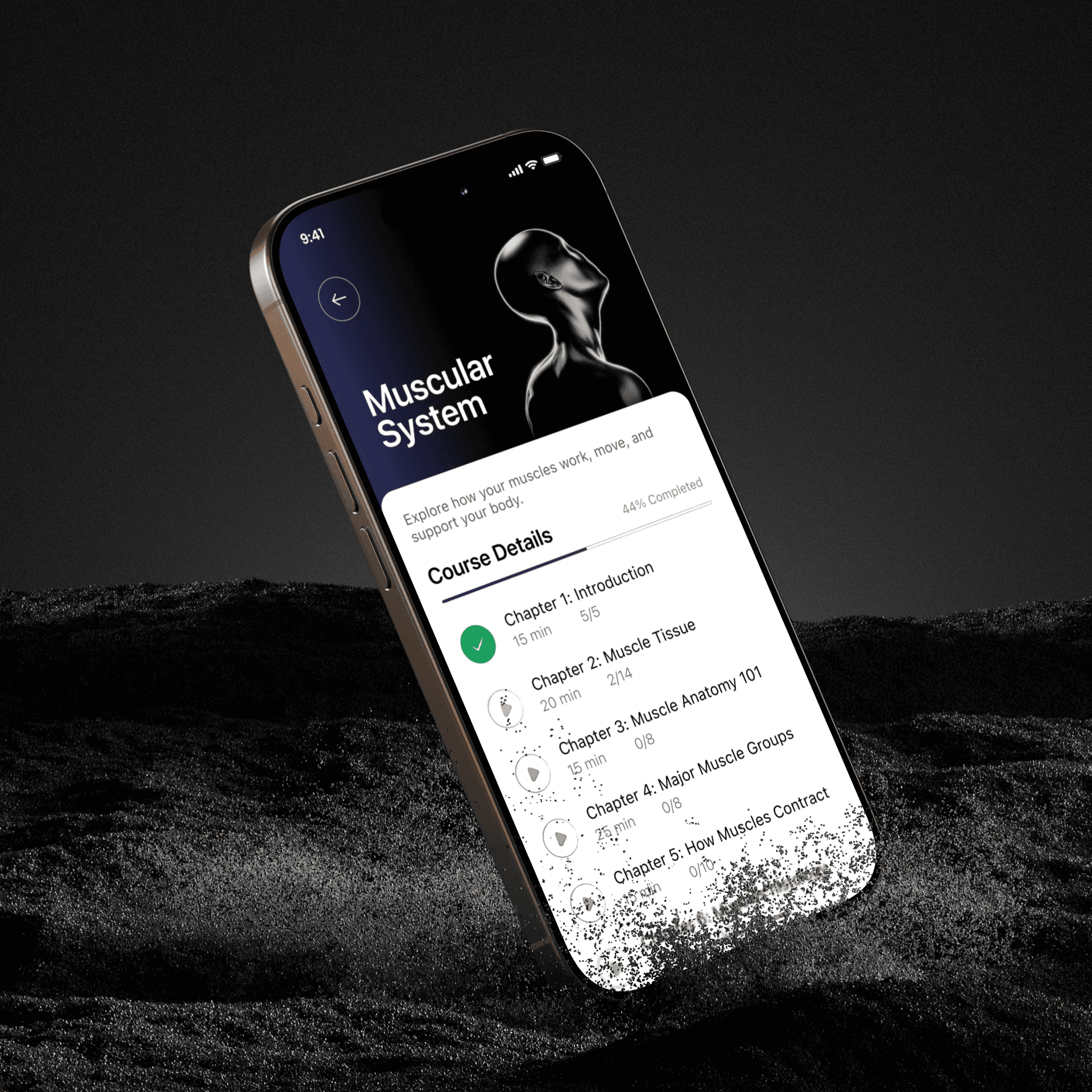
The final product integrates structured lessons, interactive anatomical exploration, and real-time knowledge checks into a cohesive mobile experience that supports both foundational learning and exam preparation.
Gamification & Progress System.
XP tracking, streak systems, and completion indicators reinforce long-term engagement. Learners can monitor mastery levels and identify weak areas for focused review.
Impact.
Improves health literacy, supporting better long-term health outcomes.
Makes biology more engaging for younger learners through interactive, gamified content.
Helps reduce misinformation by giving users a trustworthy science foundation.
Encourages curiosity and promotes interest in health and science careers.